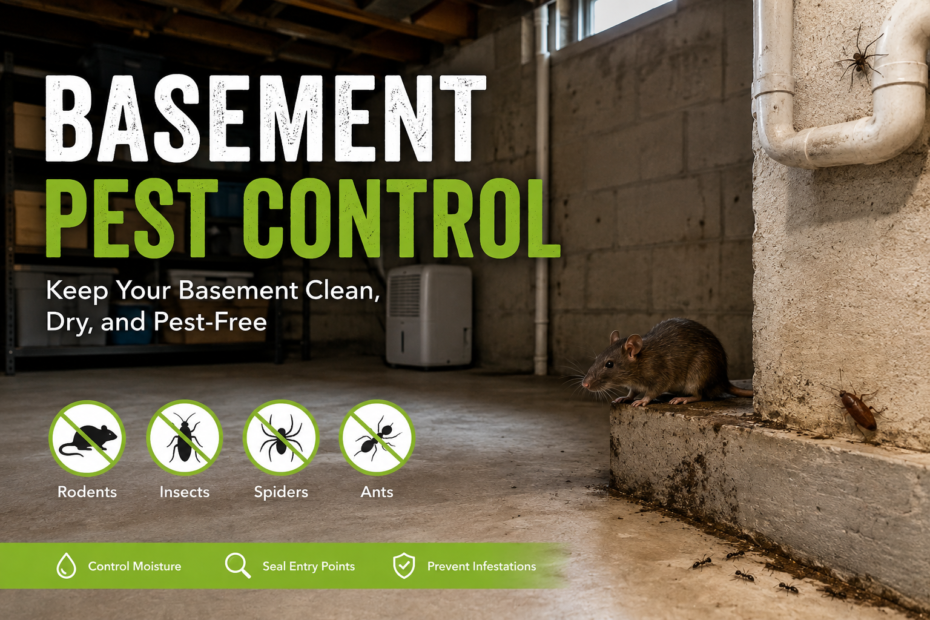
Spring: The Critical Window for Pre-Renovation Pest Control
Spring is widely considered the busiest season for termite activity, and it is the point in the year when swarming colonies are most likely to be discovered inside a home. If you are planning to finish your basement in the coming months, scheduling an inspection in early spring, before framing begins, gives you the clearest picture of what is happening behind existing walls and within the foundation itself. Termites are drawn to the same damp, dark conditions that make basements challenging to finish in the first place, so this is not a coincidence you can afford to ignore. Ants also become significantly more active as soil temperatures rise, and many species will use foundation cracks as an entry point right as you are preparing to seal those same areas with insulation and framing. Scheduling treatment before construction starts also gives any necessary follow-up visits time to happen without disrupting your renovation timeline. If a termite treatment requires drilling or trenching around the foundation, you want that finished before new framing and flooring make the work more complicated and expensive.Timing Your Pest Treatment Around the Renovation Schedule
The ideal sequence looks like this: inspection and treatment first, then demolition and framing, then a second inspection before drywall goes up, and a final check before flooring is installed. Each of these checkpoints exists because pests can move into a basement mid-project, especially once walls are opened up and temporary gaps in insulation or vapor barriers create new points of entry. A single inspection at the start of the project is not enough if the renovation stretches across several months or crosses into a new season. Residential properties generally benefit from quarterly service, and homes in regions with more pronounced seasonal shifts, such as the Northeast, are often advised to schedule as many as six treatments per year. For a basement renovation specifically, aligning at least two of those visits with your construction milestones, once before walls close up and once after flooring is complete, is a practical way to apply that broader recommendation to a single project.Seasonal Pest Threats in Basements: What to Expect Year-Round
Different pests peak at different points in the year, and a finished basement without ongoing awareness of that cycle can quietly become vulnerable again. The best times to schedule pest control treatment vary by season, with spring bringing termites and ants, summer favoring mosquitoes and cockroaches, fall driving rodents and spiders indoors as temperatures drop, and winter pushing bed bugs and rodents toward the warmth of finished interior spaces. Fall in particular deserves attention from basement owners, since rodents and spiders actively seek shelter as outdoor temperatures fall, and a finished basement with new insulation offers exactly the kind of warm, undisturbed environment they are looking for.| Statistic | Figure | Source |
| Homeowners reporting more pests than five years ago | 16% | Modern Pest Services, 2026 |
| Homeowners finding mosquitoes indoors during winter | 28% | Modern Pest Services, 2026 |
| Recommended residential service frequency | Quarterly (6x/year in Northeast) | Catseye Pest, 2026 |
| Peak termite swarming season | Spring | Gunter Pest & Lawn, 2026 |
| Peak rodent and spider migration indoors | Fall | Gunter Pest & Lawn, 2026 |
Post-Renovation Pest Prevention and Ongoing Maintenance
Once your basement is finished, the moisture and humidity conditions that originally attracted pests do not disappear on their own, they simply move behind new walls where they are harder to detect. This connection between dampness and infestation risk is worth understanding in more depth, and it is explored well in a piece on how basement moisture invites pests and what homeowners can do to manage it long after construction wraps up. Addressing humidity control, ventilation, and drainage as part of your finishing project is one of the most effective ways to reduce pest pressure going forward. A growing number of homeowners, about 16 percent, say they are dealing with more pest problems now than they were five years ago, which points to a broader trend rather than an isolated issue tied to any one home or region. Building a quarterly or seasonal pest control schedule into your basement maintenance routine, the same way you might schedule HVAC filter changes or gutter cleaning, keeps small problems from becoming expensive ones. A finished basement represents a significant investment, and protecting it with consistent, season-aware pest management is one of the simplest ways to make sure that investment lasts.Run the numbers: Planning the finish too? Price your project with our basement finishing cost calculator, and see the right order for pest control, moisture fixes and framing in our 12-step basement finishing checklist.