Crawl Space Encapsulation Cost Calculator
- 2026 contractor pricing
- Liner thickness and coverage options
- Shows what’s required by code
How much does crawl space encapsulation cost?
Crawl space encapsulation typically costs $1,500 to $15,000, and the average homeowner pays around $5,500. A basic vapor barrier on the ground runs about $1.50–$3 per square foot. Full encapsulation, with the walls lined, vents sealed and a dehumidifier installed, usually lands between $5 and $8 per square foot. Drainage, mold treatment or insulation removal can double the bill.
Here’s what the calculator returns at average U.S. prices with standard clearance, 3-foot walls and basic cleanout included:
| Crawl space size | Vapor barrier only | Full encapsulation | Premium |
|---|---|---|---|
| 600 sq ft | $1,400 | $4,890 | $6,150 |
| 1,000 sq ft | $2,340 | $6,220 | $7,930 |
| 1,500 sq ft | $3,510 | $7,790 | $9,980 |
| 2,000 sq ft | $4,680 | $9,270 | $11,890 |
Where the money goes
Labor is usually 50–70% of the bill, because the work happens on hands and knees in a tight space. Materials make up the rest:
| Item | Typical installed price |
|---|---|
| Floor liner (12-mil to 20-mil) | $1.50–$2.50 per sq ft |
| Wall liner with termination bar | $2–$3 per sq ft of wall |
| Sealing vents and access door | $800–$1,100 |
| Rigid foam wall insulation | $2.50–$3 per sq ft of wall |
| Crawl space dehumidifier | $1,500–$2,000 |
| Perimeter drain and sump pump | $3,000–$6,500 |
| Mold treatment | $1.50–$2 per sq ft |
| Old insulation removal | $1.50–$2 per sq ft |
| Permit (where required) | $100–$250 |
Watch for material markups. Liner itself costs roughly $0.45–$0.80 per square foot, so a quote that charges several times that for material deserves a closer look. Ask for labor and materials to be itemized separately.
Vapor barrier vs. full encapsulation
A vapor barrier is a plastic liner laid over the dirt floor. It stops moisture from evaporating up out of the ground, which is the biggest single source of crawl space dampness, but the vents stay open and humid outdoor air still gets in. It’s a solid, low-cost improvement for crawl spaces in dry climates or with only mild dampness.
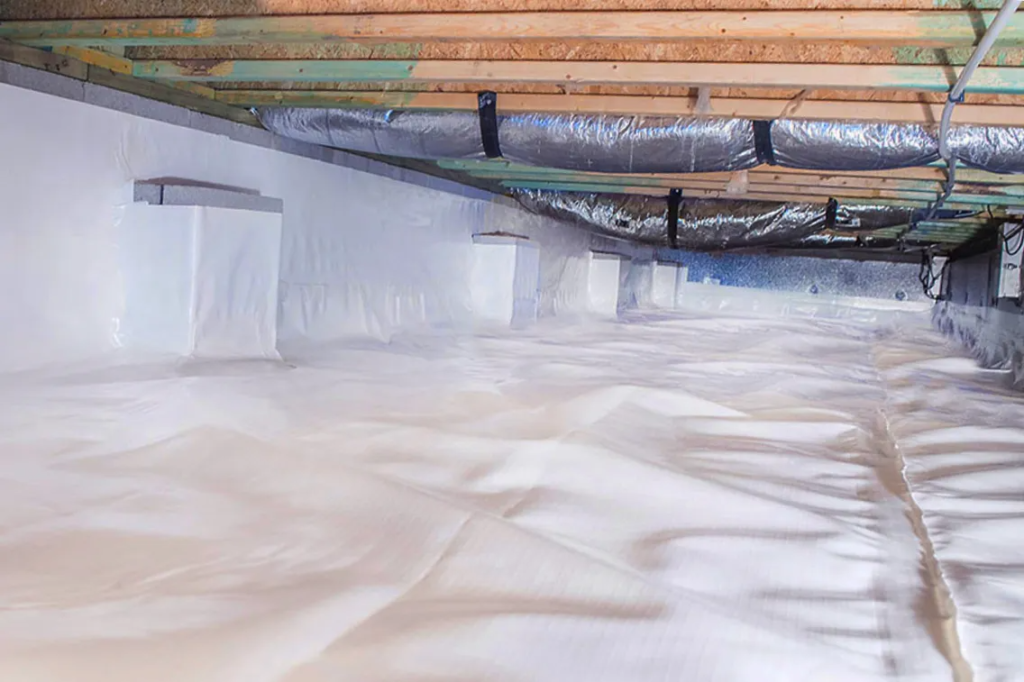
Full encapsulation turns the crawl space into a sealed, semi-conditioned part of the house. The liner runs up the walls and is fastened with a termination bar, seams and piers are taped, foundation vents and the access door are sealed, and a dehumidifier keeps humidity in check. It’s the better choice in humid climates, where ductwork runs through the crawl space, or where you’ve had mold, musty smells or pest problems.

What building codes require
Most local codes follow the International Residential Code. It allows sealed (“unvented”) crawl spaces as long as the ground is fully covered with a vapor retarder, with seams overlapped and sealed and the liner run up the walls, and the space gets some form of moisture control. That means one of three things: a continuously running exhaust fan, a supply of conditioned air from your HVAC system, or a dehumidifier. In practice, a dehumidifier is the most common choice, which is why the calculator flags a sealed crawl space without one. Check your local code, since some towns also require a permit or inspection.
Costs contractors don’t always mention up front
- Prep work. Mold treatment, old insulation removal and debris cleanout must happen before the liner goes down. Price the full cleanup with our crawl space cleaning calculator.
- Drainage. If water pools after rain, a liner alone will trap it. Budget for a drainage system and sump pump first.
- Structural repairs. Rotted joists or sinking piers should be fixed before sealing. See our foundation repair cost calculator.
- Electrical. The dehumidifier and any sump pump need outlets, ideally on their own circuit.
- Permits and inspections. Permit fees typically run $100 to $250 where they’re required.
Sales tactics to watch for
- “Sign today” discounts. Artificial deadlines are designed to stop you from comparing bids. Good contractors don’t need them.
- Bundled packages. Packages that include annual pest service, premium liners or extra equipment may include things you don’t need. Ask for each item priced separately.
- Scare tactics about mold. Ask for photos and, for significant mold, consider an independent inspection before paying for remediation.
- Oversized equipment. Most crawl spaces need one dehumidifier. Two units for an average home is usually overkill.
How to get a fair price
- Get at least three written bids, as This Old House recommends, all for the same scope.
- Compare specifications, not just totals: liner thickness, whether walls and piers are covered, how vents are sealed, and which dehumidifier is included.
- Ask about the warranty on both the liner and the dehumidifier, and whether it transfers to a buyer.
- Schedule off-season. Late fall through early spring is usually slower for crawl space contractors, and pricing and availability are often better.
- Do the easy prep yourself. Clearing out stored items and debris can trim labor.
Is crawl space encapsulation worth it?
For crawl spaces with real moisture problems, usually yes, but not mainly for energy savings. Sealing and insulating the crawl space typically trims heating and cooling costs by roughly 10–20%, which for most homes is a few hundred dollars a year. That alone takes many years to pay back the cost.
The stronger case is protection. A dry crawl space prevents mold, wood rot, sagging floors and pest infestations, each of which can cost thousands to repair. It also improves indoor air, since a large share of the air on your first floor comes up from below. And a clean, sealed crawl space is a plus when you sell, because it tends to sail through home inspections.
If your crawl space is already dry, a vapor barrier and good gutters may be all you need.
Related guides
- Crawl space cleaning cost calculator
- Dehumidifier size calculator
- Foundation repair cost calculator
- What to know about raised foundations
Frequently asked questions
How much does it cost to encapsulate a 1,000 sq ft crawl space?
About $2,000–$3,000 for a vapor barrier only, and roughly $6,000–$8,000 for full encapsulation with sealed walls and vents and a dehumidifier. Drainage, mold treatment or insulation removal add to that.
Do I need a dehumidifier after encapsulation?
Almost always. A sealed crawl space needs a way to control humidity, and codes based on the International Residential Code require a dehumidifier, conditioned air supply or exhaust fan for unvented crawl spaces. A dehumidifier is the most common choice.
What thickness vapor barrier is best for a crawl space?
12-mil is the most common choice and works well for most homes. A 20-mil reinforced liner resists punctures better and is worth it if you store items in the crawl space or crawl through it often. Thin 6-mil plastic tears easily and isn’t recommended for encapsulation.
How long does crawl space encapsulation last?
A quality liner typically lasts 15–20 years or more, and many come with long or lifetime warranties. Dehumidifiers generally last 5–10 years before needing replacement.
Can I encapsulate my crawl space myself?
A basic vapor barrier is a manageable DIY job if the space is dry and has decent clearance, with materials costing well under $1 per square foot. Full encapsulation, with sealed walls, vents, drainage and a dehumidifier, is best left to professionals, especially if mold, water or structural problems are present.
Pingback: Basement Waterproofing Cost Calculator - Basement Calculator
Pingback: Foundation Repair Cost Calculator - Basement Calculator
Pingback: Sump Pump Installation Cost Calculator (2026)
Pingback: Radon Mitigation Cost Calculator (2026)
Pingback: Mold Remediation Cost Calculator (2026)