Basement finishing is the conversion of an unfinished below-grade space into code-compliant living area, and the homeowner’s choice between DIY and hiring a professional comes down to one trade-off: DIY lowers the cash cost, while a professional crew delivers a shorter timeline, permitted work, and someone accountable for the result. For basement professionals, that trade-off is the sales conversation. Every homeowner who requests your quote is also pricing the DIY route.
Contractors who win those jobs do not argue that DIY is impossible. They show, with real numbers, where DIY savings are smaller than expected and where professional work earns its price.
This guide compares the two approaches on cost, schedule, and risk, then gives you a step-by-step framework for consultations, pricing, and hybrid offers in 2026.
Key Takeaways
- DIY saves less than homeowners think. Published cost guides put labor at roughly 10% to 40% of a basement budget, and most DIYers still hire out electrical, plumbing, or HVAC.
- Timeline is your strongest differentiator. Professional construction usually runs about 4 to 8 weeks; part-time DIY work commonly stretches across several months.
- Permits and inspections are where DIY stalls. Utility rough-ins are the stage most likely to fail inspection or require a hired trade anyway.
- Hybrid packages capture DIY-leaning buyers. Offering rough-in, inspections, and drywall while the homeowner handles paint, flooring, or trim turns a lost bid into a signed job.
- Stalled DIY projects are a real market. “Finish what I started” jobs need a distinct inspection-first process and pricing model.
- Anchor every consultation in numbers. Walking clients through the basement finishing cost calculator sets realistic expectations before your quote lands.
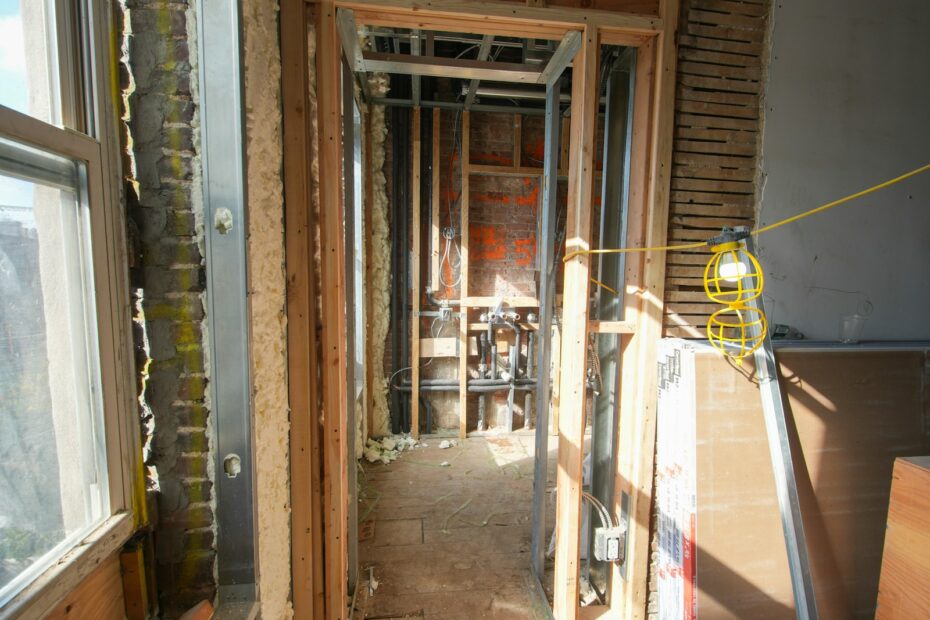
Framing and rough-in is where DIY and professional basement projects diverge most. Photo: Olek Buzunov on Unsplash
Why the DIY Question Matters More to Contractors in 2026
Homeowners are investing in the houses they already own. Harvard’s Joint Center for Housing Studies projects homeowner improvement spending of roughly $518 billion by the end of 2026, even as growth slows later in the year.
Slower growth means more price sensitivity. Homeowners compare quotes more carefully, watch more how-to videos, and seriously consider doing part or all of the work themselves.
That makes the DIY-versus-pro conversation a standard part of nearly every basement consultation. Contractors who handle it well close more jobs at healthier margins.
Three Kinds of DIY-Minded Clients
- The comparison shopper. Wants your quote mainly to see what DIY would “save.”
- The partial DIYer. Is willing to pay for the hard parts but wants to handle finishes.
- The stalled DIYer. Started months ago, hit an inspection problem or ran out of time, and now needs a pro.
Each needs a different pitch, and the framework later in this guide covers all three.
DIY vs. Professional Basement Finishing: The Core Differences
Both paths can produce a good basement. They differ in who carries the cost, the schedule, and the risk.
Cost
Published cost ranges vary widely because they describe different scopes. HomeAdvisor’s basement cost guide cites about $7 to $23 per square foot, a range that mostly reflects simpler projects on spaces that are already dry and partly wired.
Full-scope, permitted contractor work runs higher. Block Renovation’s 2026 cost guide puts a contractor-led finish at roughly $30 to $75 per square foot, with complete living suites climbing past $100.
That gap is the root of most sticker shock. Homeowners often anchor on the low national figure, then compare it with a quote for a full-scope job.
DIY eliminates some, but not all, of the labor line. NerdWallet’s basement cost breakdown estimates labor at around 20% of a typical project, and other guides range from 10% to 40%. Materials, permits, and hired-out trade work remain.
Timeline
Professional crews work full days in sequence. Angi reports that a basement finish averages about five weeks of work, with a range of roughly 2 to 12 weeks. With design and permitting added, total project time often reaches three to four months.
DIY timelines depend on available hours. A homeowner working weekends may need several months just to reach drywall, and inspection scheduling can add idle weeks at each stage.
Risk and Code Compliance
Electrical, plumbing, and HVAC rough-ins are where DIY projects most often stall or fail inspection. Angi’s contractor guidance specifically recommends leaving utility rough-ins to licensed pros.
Unpermitted work also follows the house. Appraisers, lenders, and buyers can discount or question it, which we cover in our guide to basement finishing and home value. That is a legitimate selling point for permitted professional work.
Comparison Table: DIY, Hybrid, and Full-Service Finishing
Most real projects fall into one of three models. Use this table in consultations to show clients the full picture, not just the price.
| Factor | Full DIY | Hybrid (Pro Rough-In + DIY Finishes) | Full-Service Contractor |
|---|---|---|---|
| Typical cost | Lowest cash outlay; materials dominate | Moderate; pays for the high-skill stages | Highest; often $30 to $75+ per sq ft |
| Construction timeline | Months; highly variable | Weeks for pro stages, then homeowner pace | About 4 to 8 weeks of work |
| Permit and inspection risk | Highest | Low; pro handles inspected stages | Lowest; contractor pulls permits |
| Warranty and accountability | None beyond product warranties | Covers contractor’s scope only | Single point of responsibility |
| Best-fit homeowner | Skilled, flexible schedule, simple scope | Handy, budget-focused, wants it done right | Time-limited, complex scope, resale-focused |
| Contractor opportunity | Future rescue or inspection-fix work | Smaller ticket, faster close, lower risk | Full project margin |
Myth vs. Reality: What Homeowners Get Wrong About DIY Basements
| Myth | Reality |
|---|---|
| “Doing it yourself cuts the cost in half.” | Labor is usually a minority of the budget. Materials, permits, and hired-out electrical or plumbing remain, so real DIY savings are often far smaller than homeowners expect. |
| “A DIY basement will be done in a month.” | Even professional crews average around five weeks of work. Part-time DIY work, inspection waits, and drywall drying times routinely stretch projects to several months. |
| “Contractor markups are where all the money goes.” | Overhead pays for insurance, licensing, permit handling, waste removal, tools, and warranty coverage. A DIYer either pays for those separately or goes without them. |
| “Contractors won’t take partial jobs.” | Many will, and should. A well-scoped hybrid job is lower risk and faster to close than a full project the client cannot afford. |
| “If it looks finished, it’s finished.” | Without permits and inspections, the space may not count as legal living area, may complicate a future sale, and may need walls opened later. |
How to Handle the DIY Question in a Consultation

Homeowners who plan to DIY often underestimate the prep work before framing even starts. Photo: Zachary Kadolph on Unsplash
Use this six-step process whenever a client mentions doing some or all of the work. It replaces a defensive price argument with a transparent comparison.
- Ask about DIY early. Raise it yourself in the first conversation. Clients relax when they do not have to hide that they are considering it.
- Confirm the basement is ready to finish. Check for moisture, cracks, and radon before discussing walls. Price any water issues with the basement waterproofing cost calculator so they are part of every scenario.
- Build a shared baseline. Run the square footage and finish level through the Basement Calculator together. A neutral third-party estimate takes the heat out of your number.
- Break the budget into stages. Show framing, insulation, electrical, plumbing, HVAC, drywall, flooring, and trim separately, so the client sees exactly which slices DIY can remove.
- Offer three options. Full DIY with paid inspection-prep help, a hybrid package, and full service. Price the hybrid so it is clearly the best value per dollar of risk removed.
- Put the timeline in writing. State start dates, inspection milestones, and completion. A firm calendar is your strongest answer to “I could do it myself.”
What a Good Hybrid Package Includes
- Permits pulled and managed by the contractor
- Framing, including soffits around ducts and beams
- Electrical, plumbing, and HVAC rough-ins by licensed trades
- Insulation and all required inspections
- Drywall hang and finish, ready for paint
- A written handoff: what the homeowner owns, what your warranty covers, and what not to cut into
Where to Draw the Handoff Line
The cleanest handoff point is after drywall finishing. Paint, flooring, trim, doors, and fixtures are tasks homeowners can do well, and none of them require inspection in most jurisdictions.
Avoid handing off before inspections. If the homeowner’s work fails an inspection on your permit, the problem becomes yours.
Real-World Scenario: Turning a DIY Shopper Into a Signed Job
Consider a hypothetical consultation. A homeowner has an 800 sq ft unfinished, dry basement and wants a rec room, an office, and a half bath. Your full-service quote is $48,000, and the homeowner says a friend finished a basement “for about half that.” (All figures below are illustrative.)
Step 1: Show Where the Money Goes
- Materials: about $16,000 regardless of who installs them.
- Licensed trades: about $11,000 for electrical, plumbing, and HVAC that the homeowner would hire anyway.
- Permits and disposal: about $2,000.
- Contractor labor, supervision, and overhead: about $19,000.
Realistic full-DIY cost lands near $29,000, not $24,000, because the trades and permits do not disappear. The client also takes on roughly 400 to 600 hours of work and all of the inspection risk.
Step 2: Offer the Hybrid
You propose a hybrid at $38,000. You handle permits, framing, rough-ins, inspections, and drywall in about five weeks. The homeowner paints, installs flooring and trim, and sets fixtures.
Step 3: Compare the Real Trade-Off
- Full DIY: about $29,000, several months, all code risk on the homeowner.
- Hybrid: about $38,000, inspected work done in weeks, homeowner saves $10,000 versus full service.
- Full service: $48,000, about seven weeks total, single warranty.
The Outcome
The homeowner signs the hybrid. You close a $38,000 job with less finish-stage labor, fewer punch-list callbacks, and no argument about price.
The lesson is simple. Most DIY shoppers are not trying to avoid contractors entirely. They are trying to avoid paying for work they believe they can do well.
For a deeper breakdown of the framing line item alone, the basement framing cost calculator compares hired-out and DIY framing for a specific wall layout.
Taking Over Stalled DIY Projects
Unfinished DIY basements are a steady source of work, but they carry hidden liability. Treat them as a separate service with its own process.
- Inspect before you quote. Open sample wall sections, check vapor barriers and insulation placement, and review any existing electrical work.
- Check permit status. Find out what was permitted, what was inspected, and what was not. Some jurisdictions require you to re-permit or open walls for inspection.
- Price for unknowns. Use a time-and-materials allowance for remediation, or a fixed fee for an assessment followed by a firm quote.
- Define your warranty boundary. Put in writing that you warranty your own work, not the homeowner’s.
- Document everything. Photograph existing conditions before you touch anything.
Moisture is the most common problem in stalled projects. Our article on basement moisture control mistakes covers the vapor barrier and insulation errors you will see most often.
Pricing and Positioning Tips for Basement Pros
- Publish ranges, not secrets. Clients who see transparent per-square-foot ranges on your website arrive with realistic expectations.
- Itemize by stage. Stage-level pricing makes hybrid quotes easy and makes your full-service price easier to defend.
- Sell the calendar. A guaranteed start date and an inspection schedule are worth real money to time-limited homeowners.
- Lead with permits. Explain how permitted work protects resale value and insurance coverage.
- Offer financing options. Many clients choose DIY because of cash flow, not total cost. Point them to our basement financing calculator to compare HELOCs and loans.
- Respect capable DIYers. Some homeowners are skilled and should do the work. Offering paid inspection-prep visits keeps them as clients.
DIY vs. Pro Consultation Checklist
- ☐ Asked about DIY plans in the first conversation
- ☐ Moisture, cracks, and radon checked before quoting
- ☐ Calculator baseline reviewed with the client
- ☐ Budget broken out by stage
- ☐ Full DIY, hybrid, and full-service options presented
- ☐ Handoff point and warranty boundary defined in writing
- ☐ Permit responsibility assigned
- ☐ Timeline with inspection milestones provided
- ☐ Financing options discussed
For the full construction sequence, share our basement finishing checklist with all 12 steps in order with clients. You can also browse every estimating tool on our basement calculators page.
Summary
DIY basement finishing lowers the cash cost for homeowners, while professional finishing buys speed, permitted work, and accountability. The real DIY savings are usually smaller than clients expect, because materials, licensed trades, and permits remain.
Basement professionals who win these jobs raise the DIY question early, price by stage, offer a well-defined hybrid option, and treat stalled DIY projects as a distinct service with its own safeguards.
Over to you: How often do clients bring up DIY in your consultations, and have hybrid packages helped you close more jobs or created more headaches? Share what is working for your business in the comments.