Heated Floor Cost Calculator
- 2026 installed pricing
- Electric vs. hydronic comparison
- Monthly running costs
How much do heated floors cost?
Heated floors typically cost $10 to $25 per square foot installed, not counting the floor covering on top. A small bathroom with electric heating mats usually runs $1,200 to $2,000, including the thermostat and a new circuit. Heating a whole basement or main floor costs $7,000 to $20,000 or more. There, the choice between electric and hydronic matters most, because it drives both the install price and the monthly bill.
Here’s what the calculator returns at average U.S. prices, with a permit and without the floor covering unless noted:
| Project | Installed cost | Running cost |
|---|---|---|
| 50 sq ft bathroom, electric mats | $1,550 | $9/mo |
| Same bathroom with new porcelain tile | $2,200 | $9/mo |
| 150 sq ft kitchen retrofit, electric cable | $2,920 | $28/mo |
| 400 sq ft basement, electric with insulation | $7,830 | $73/mo |
| 400 sq ft basement, hydronic with a water heater | $9,000 | $18/mo |
| 800 sq ft basement, hydronic tied into an existing boiler | $14,500 | $36/mo |
| 1,200 sq ft whole floor, hydronic | $18,100 | $54/mo |
Electric vs. hydronic heated floors
| Electric | Hydronic | |
|---|---|---|
| Installed cost | Lower, about $10–$20/sq ft | Higher, about $13–$20/sq ft plus a heat source |
| Running cost | Higher, since it runs on electricity | Much lower, especially with gas |
| Best for | Bathrooms, kitchens, single rooms | Basements, whole floors, whole homes |
| Added floor height | About 1/8 in | About 1 in |
| Warm-up time | 30 to 60 minutes | Slower, better left on |
| DIY-friendly? | Yes, except the electrical connection | No, needs a heating pro |
Electric systems use thin heating mats or cables embedded in thinset under tile, or in a membrane under other flooring. They’re inexpensive to install and heat up quickly, which makes them ideal for a bathroom or kitchen where you want warm floors in the morning. Hydronic systems circulate hot water through tubing under the floor from a boiler or water heater. They cost more to install but far less to run, so they win when you’re heating a large area or using the floor as the main heat source. The calculator compares the two for your space.
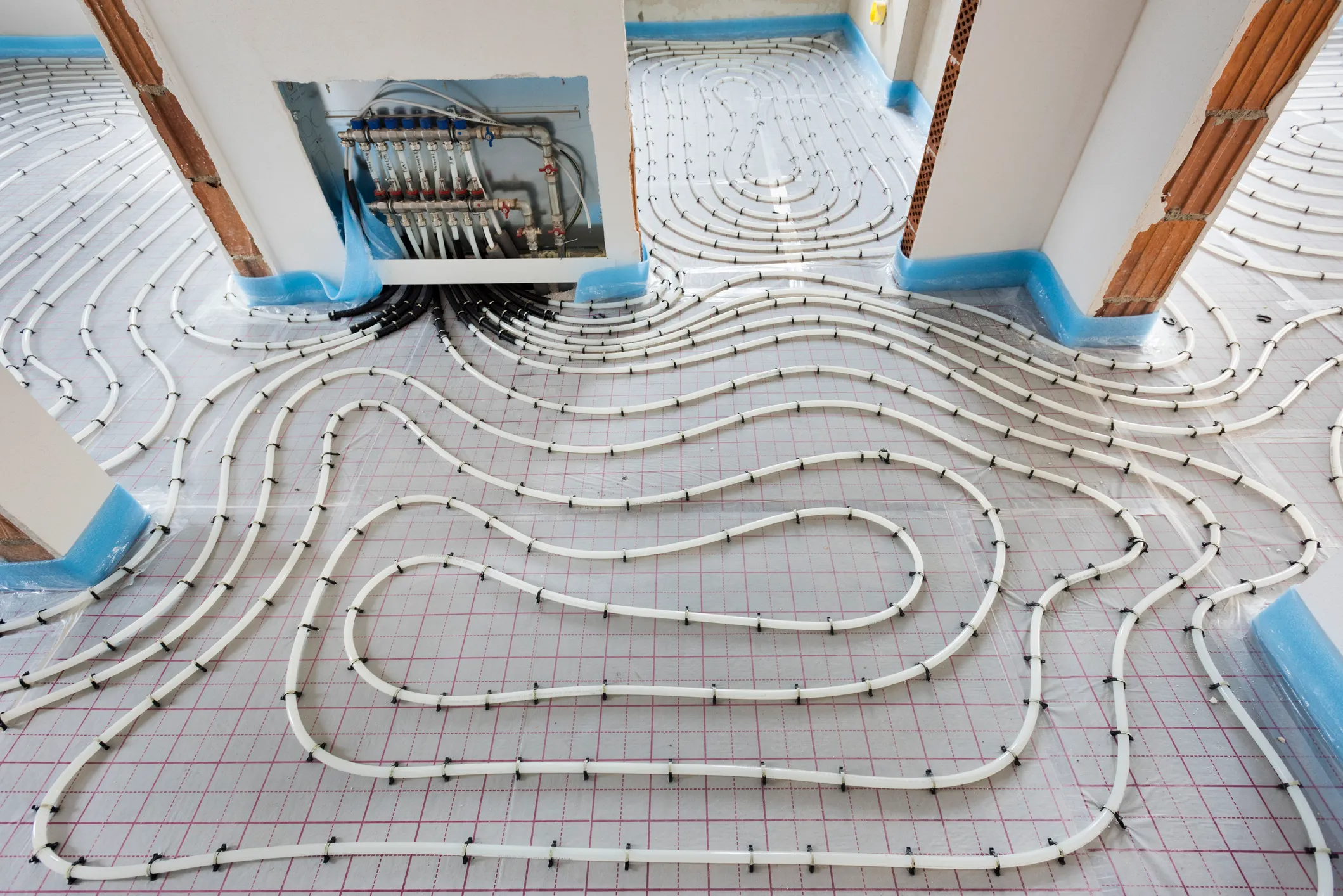
Heated floors in a basement
Basement floors are cold because they sit on concrete in contact with the ground, which makes them one of the best places for radiant heat. The key is insulation. Without an insulating layer between the slab and the heating element, much of the heat soaks down into the concrete and the floor takes longer to warm up. Most installers use foam board, cork or an insulated underlayment rated for radiant heat. It adds a little height and cost but noticeably lowers running costs.
Deal with moisture first. If your slab gets damp, fix it before you bury a heating system under new flooring. Price it with our waterproofing cost calculator. If you’re finishing the whole basement, add heated floors to your basement finishing estimate.
Which flooring works over radiant heat?
- Tile and stone: the best choice. They conduct and hold heat well.
- Luxury vinyl plank: works well if the product is rated for radiant heat. Most cap floor temperature around 80–85°F. See our guide to basement flooring options.
- Engineered wood and laminate: fine with a compatible underlayment and a floor-temperature sensor.
- Carpet: possible with thin carpet and low-insulation padding, but it slows heat transfer.
- Solid hardwood: generally not recommended, since heat and dryness can cause gaps and cupping.
What it costs to run heated floors
Electric floors draw about 12 watts per square foot while heating, and a thermostat cycles them on and off. A 50 sq ft bathroom floor running a few hours each morning and evening typically adds only $5–$15 a month in winter. Costs grow quickly over large areas, which is why hydronic systems, running on gas or an efficient water heater, usually make more sense for a whole basement. A programmable thermostat with a floor sensor keeps costs down by heating the floor only when you need it.
Mistakes to avoid
- Heating under cabinets and tubs. Heat only the open floor. It wastes money and can damage fixtures.
- Skipping subfloor prep. An uneven floor causes hot and cold spots and cracked tile.
- Forgetting floor height. Hydronic systems and insulated underlayments can raise the floor enough to affect doors and transitions.
- Not testing the cable. Check electric cable resistance before, during and after installing the flooring. A nicked cable under tile is costly to find and fix.
- Choosing electric for a huge area. It’s cheap to install but can be expensive to run as your main heat.
For a first-hand account of these pitfalls, read what one homeowner learned installing heated floors.
DIY or hire a pro?
Electric mats are one of the more DIY-friendly upgrades for a handy homeowner already tiling a bathroom. Many manufacturers sell complete kits with a thermostat. The final connection to a new dedicated circuit should be done by a licensed electrician, and many towns require a permit. Hydronic systems involve boilers, pumps and plumbing and should be installed by a heating contractor experienced with radiant heat.
Related guides
- Heated floor installation mistakes
- Basement heating options
- Basement bathroom cost calculator
- Basement finishing cost calculator
Frequently asked questions
How much does it cost to put heated floors in a bathroom?
An electric heated floor for a typical 40–60 sq ft bathroom costs about $1,200 to $2,000 installed, including mats, a thermostat and a new electrical circuit. New tile adds roughly $10–$15 per square foot installed.
Is it worth putting heated floors in a basement?
Often, yes. Basement slabs are cold, and radiant heat makes the space far more comfortable. Add insulation under the heating system, and for a large basement consider hydronic heat, which costs more up front but much less to run.
How much does it cost to run heated floors?
A small electric bathroom floor typically costs $5–$15 a month in winter. A 400 sq ft electric basement floor running several hours a day can cost $50–$100 a month, while a hydronic system heating the same area might cost a quarter of that.
Can heated floors be the main heat source?
Yes, especially hydronic systems in well-insulated spaces. Electric floor heat can heat a small room on its own, but using it as primary heat for large areas gets expensive.
Can you put heated floors under vinyl plank?
Many luxury vinyl plank products are approved for radiant heat, usually with a maximum floor temperature around 80–85°F. Check the flooring manufacturer’s instructions and use a thermostat with a floor sensor.
Pingback: Heated Floor Installation Tips
Pingback: Best Basement Flooring Options 2026
Pingback: Smart Basement Heating Options That Save Energy