Radon Mitigation Cost Calculator
- Uses EPA action levels
- Basements, slabs and crawl spaces
- Install and running costs
How much does radon mitigation cost?
Most homeowners pay $800 to $2,500 for a radon mitigation system, and a typical basement or slab system runs about $1,200 to $1,800. Crawl spaces cost more, usually $1,500 to $5,000, because the dirt floor has to be covered with a sealed membrane first. Dense soil under the slab, hiding the pipe inside the house and finished basements all push the price up.
Here’s what the calculator returns for common homes at average U.S. prices, including sealing cracks and the sump lid:
| Home | Estimated cost |
|---|---|
| 1,200 sq ft basement, gravel under slab, pipe on outside wall | $1,550 |
| 1,500 sq ft slab-on-grade home, pipe on outside wall | $1,550 |
| 1,200 sq ft basement, dense soil, pipe through the attic | $2,480 |
| 2,000 sq ft finished basement, dense soil, pipe through the attic | $2,780 |
| 1,800 sq ft basement and crawl space combination | $3,340 |
| 1,200 sq ft dirt-floor crawl space | $3,680 |
When do you need radon mitigation?
Radon is a colorless, odorless radioactive gas that seeps up from soil and rock into homes, and it collects most in basements and ground floors. The EPA estimates radon causes about 21,000 lung cancer deaths a year in the U.S., making it the second leading cause of lung cancer after smoking.
- 4 pCi/L or higher: the EPA’s action level. Fix your home.
- 2 to 4 pCi/L: the EPA recommends considering a fix, since there’s no known safe level of radon.
- Below 2 pCi/L: generally no action needed. Retest every couple of years and after major renovations.
For context, the average U.S. home has about 1.3 pCi/L indoors, and outdoor air averages about 0.4 pCi/L.
How to test for radon
Testing is cheap and easy. Short-term test kits ($15–$30) sit in your home for 2 to 7 days before you mail them to a lab. Long-term tests run 90 days or more and give a better picture of your year-round average, since radon rises and falls with the seasons. Continuous digital monitors ($150–$250) show levels day by day. A professional test usually costs $150–$300 and is common during home sales.
Test the lowest level you live in or plan to use, with windows and doors closed as much as possible. If a short-term test comes back at 4 pCi/L or higher, confirm it with a second test before paying for a system.
Shop radon test kits on Amazon, including short-term, long-term and digital monitor options. (As an Amazon Associate we earn from qualifying purchases.)
How radon mitigation works
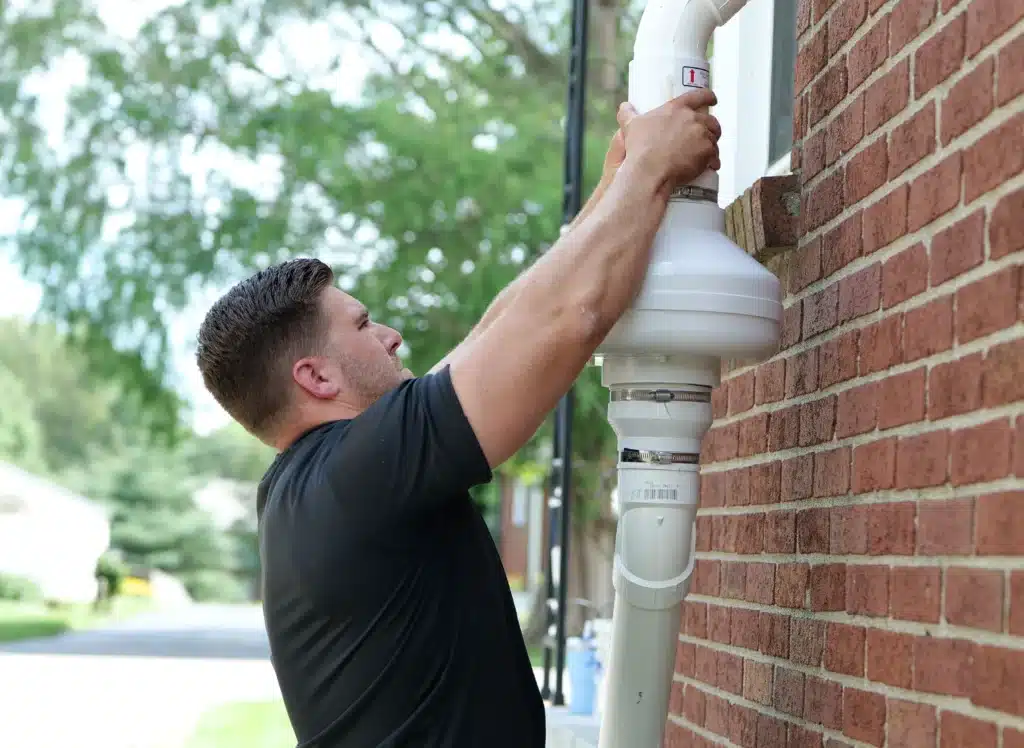
The most common system is sub-slab depressurization. The installer drills a hole through the basement floor, digs out a small pit underneath, and connects a PVC pipe to a fan that runs around the clock. The fan pulls radon from under the slab before it can enter the house and vents it above the roofline. A U-tube gauge on the pipe shows the system is working. In crawl spaces, a heavy plastic membrane is sealed over the dirt floor and walls, and the fan draws radon from underneath it.
Sealing cracks and the sump pit lid helps the system work better, but sealing alone rarely lowers radon enough. A properly installed system typically cuts levels by 80% to 99%.
What affects the price
- What’s under the slab. Gravel lets one suction point cover a large area. Dense clay or unknown fill may need two or more.
- Foundation type. Crawl spaces need a sealed membrane, and homes with both a basement and crawl space need both treated.
- Pipe route. Running the pipe up an outside wall is cheapest. Hiding it through a garage or attic costs more but looks better.
- Finished spaces. Drywall, ceilings and flooring make routing harder.
- Electrical access. The fan needs power, often an outdoor or attic outlet.
Running and maintenance costs
Radon fans run constantly but use little power, typically 50–90 watts. Expect roughly $100–$200 a year in electricity and a small amount of lost heated or cooled air. Fans usually last 5 to 10 years or more, and a replacement costs about $300–$600 installed. Check the U-tube gauge every few months, and retest every two years or after renovations.
DIY or hire a pro?
Hire a certified radon mitigation contractor. Look for certification from the National Radon Proficiency Program (NRPP) or the National Radon Safety Board (NRSB), and check whether your state licenses radon contractors. System design matters: suction points, fan size and vent location all affect whether the system actually works, and a poorly placed vent can send radon back into the house. A certified installer will also leave the system labeled and tested.
Planning to finish your basement?
Test for radon before the walls go up. Installing a system in an open, unfinished basement is faster and cheaper, and the pipe can be hidden in a wall or soffit you’re already building. See where it fits in our 12-step basement finishing guide, and price the rest of the project with our basement finishing cost calculator.
Related guides
- How to monitor basement air quality
- Crawl space encapsulation cost calculator
- Basement waterproofing cost calculator
- Basement finishing cost calculator
Frequently asked questions
How much does a radon mitigation system cost?
Typically $800 to $2,500, with most basement and slab homes paying about $1,200 to $1,800. Crawl spaces usually cost $1,500 to $5,000 because they need a sealed membrane.
What radon level requires mitigation?
The EPA recommends fixing your home if radon is 4 pCi/L or higher, and considering a fix between 2 and 4 pCi/L. There is no known safe level of radon.
How long does radon mitigation take?
Most basement and slab systems are installed in a single day. Crawl spaces and combination foundations can take one to two days. Retest 24 hours to 30 days after installation to confirm the system is working.
How much does it cost to run a radon fan?
Radon fans use about 50–90 watts and run continuously, which typically adds $100–$200 a year to your electric bill, including a small loss of heated or cooled air.
Does radon mitigation affect selling a home?
Radon tests are common during home inspections. A working, labeled mitigation system with a recent low test result reassures buyers, while a high test can lead to price negotiations or a request that the seller install a system.
Pingback: Basement Finishing Checklist: 12 Steps in the Right Order - Basement Calculator
Pingback: Smart Ways to Monitor Basement Air Quality at Home
Pingback: Essential Basement Finishing Checklist 2026